

Key Takeaways
Crane-assisted tree removal is a controlled way to take down large or hazardous trees where ordinary ground removal could damage the property.
- Crane work is most useful over roofs, pools, septic systems, and tight lots.
- The crane lifts cut sections instead of letting large wood fall into the yard.
- A site review covers tree condition, crane access, wires, structures, and traffic.
- Massachusetts crane removals commonly cost $2,000 to $15,000 and up.
- Clear access, people, pets, vehicles, and buried features before the crew arrives.
When crane-assisted tree removal is the right choice
Usually, crane-assisted tree removal costs $2,000 to $15,000 and up. Yes, we use it when a large or unstable tree cannot be brought down safely by ordinary ground methods. The typical case is a mature tree beside a structure, in a tight lot, or over an area you cannot afford to damage. The final call comes after an on-site assessment.
Trees over houses, garages, and other structures
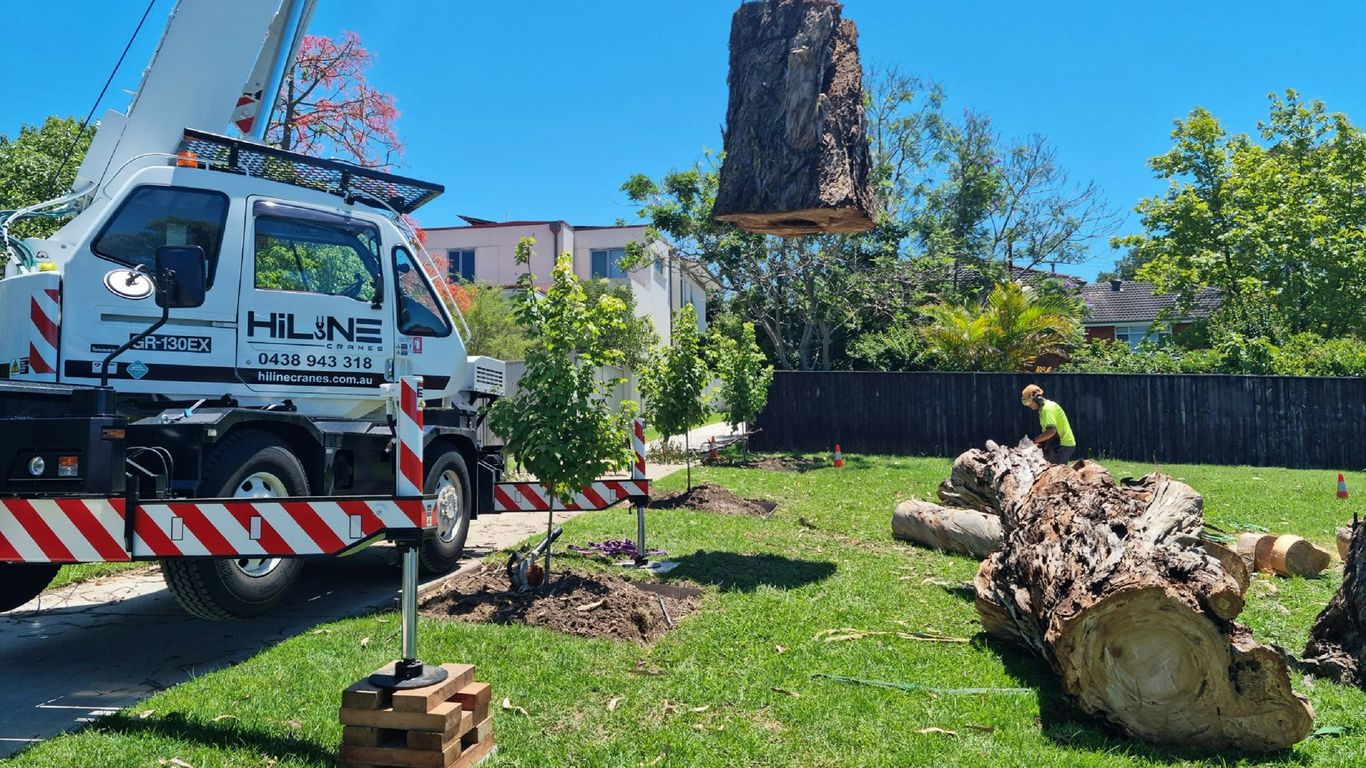
A tree over a roof leaves little room for error. Dropping sections through the canopy can damage shingles, siding, gutters, or a garage roof. With a crane, we cut manageable pieces and lift them away from the structure. Our guide to removing a tree over a house explains the same controlled approach from the homeowner’s point of view.
Tight lots with no safe drop zone
Urban and colonial-era lots often have fences, sheds, driveways, and neighboring homes packed around a mature canopy. A climber may not have a clear landing area for even one heavy limb. The crane reaches over obstacles and carries sections to a planned processing area instead of asking the yard to absorb the impact.
Trees over pools, septic systems, and protected landscaping
Pools, septic fields, stone walls, gardens, and established beds are costly to repair. They also leave little room for trucks, ropes, or falling wood. The crane is especially useful when the ground below the tree must remain untouched. Wet spring soil can make ruts and equipment movement an even bigger concern.
Damaged or unstable trees that cannot be climbed safely
Storm damage, decay, split leaders, and broken limbs can make a tree unpredictable. A climber still needs a sound structure for access and tie-in. If the tree has lost too much strength, we may plan a lift from the ground or use carefully selected rigging instead. We make that decision on site, after examining the trunk, roots, and remaining limbs.
Why a crane can protect your property
The main advantage is simple: large wood is lifted out instead of dropped into the space below. A climber lowering wood through a canopy still has to move each piece across the ground you are trying to protect. Crane-assisted removal changes that path. It can also shorten a large dismantling job, though the crane does not replace careful planning or skilled cutting.
Keeping large wood out of the yard
A crane can lift trunk sections over a house, fence, or garden and set them in a designated landing area. The wood never needs to strike the lawn or roll across the property. That matters on a septic field, beside a pool, or on soft ground that would show every tire track.
Reducing cuts, rigging, and ground impact
Large sections can often be lifted after they are prepared for a controlled pick. This may reduce the number of cuts and the amount of rope work needed near the ground. Less ground impact matters when the property has wet soil, finished landscaping, or narrow access.
Finishing large removals in fewer hours
A tree that would take a climber forty cuts is usually finished in a morning when the access and lift plan are suitable. That is a typical advantage, not a promise for every job. Tree size, condition, weather, setup, and processing space still set the pace.
Limiting damage to lawns, fences, and driveways
The crane does not make a property indestructible. It does reduce the need to drag heavy wood through the yard and limits where sections land. We still protect travel paths, keep the work zone controlled, and select a setup point that can support the equipment.
How the crew evaluates the job
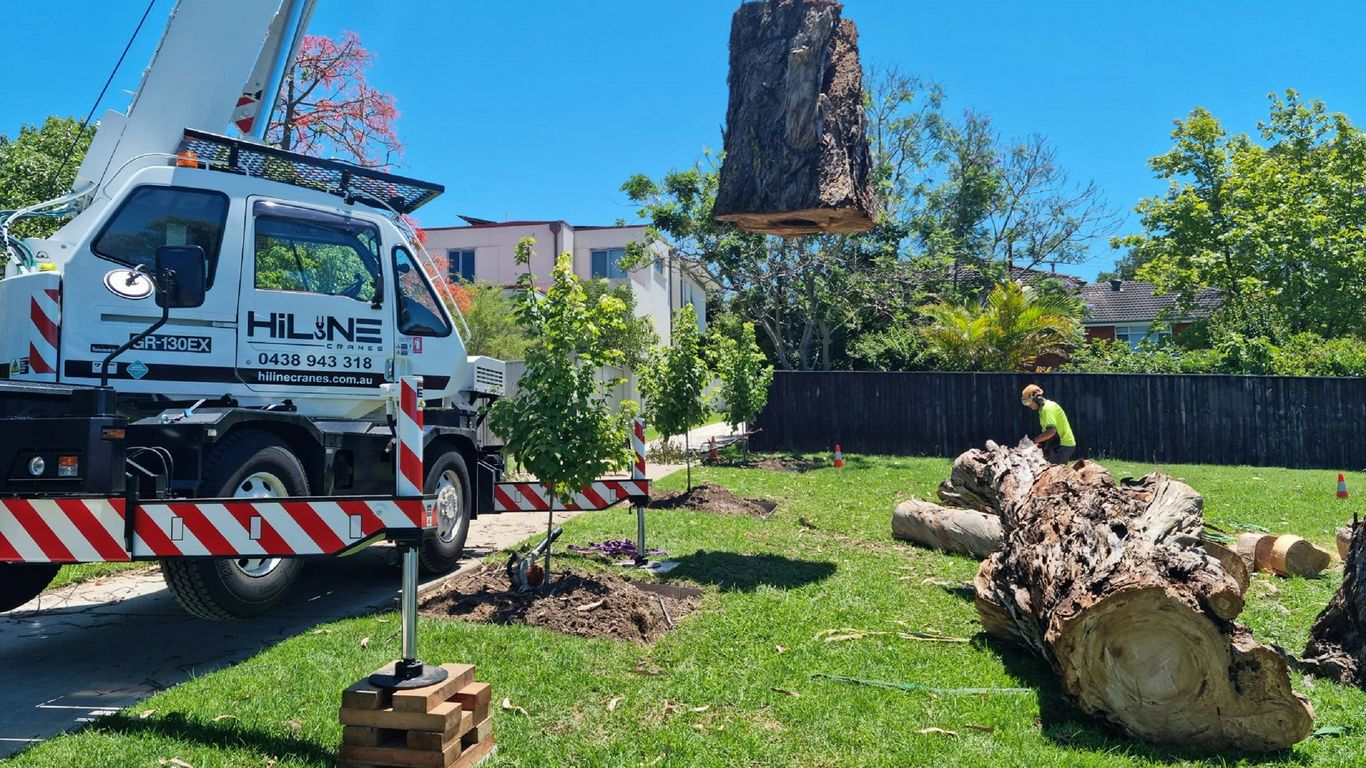
We start with the tree and the property, not with a crane size. The review identifies hazards, measures the route in, and maps the space where sections can be processed. Overhead wires, traffic, wet soil, and nearby buildings all affect the work plan. A written estimate should explain the removal, crane setup, crew, and cleanup.
Inspecting the tree and identifying hazards
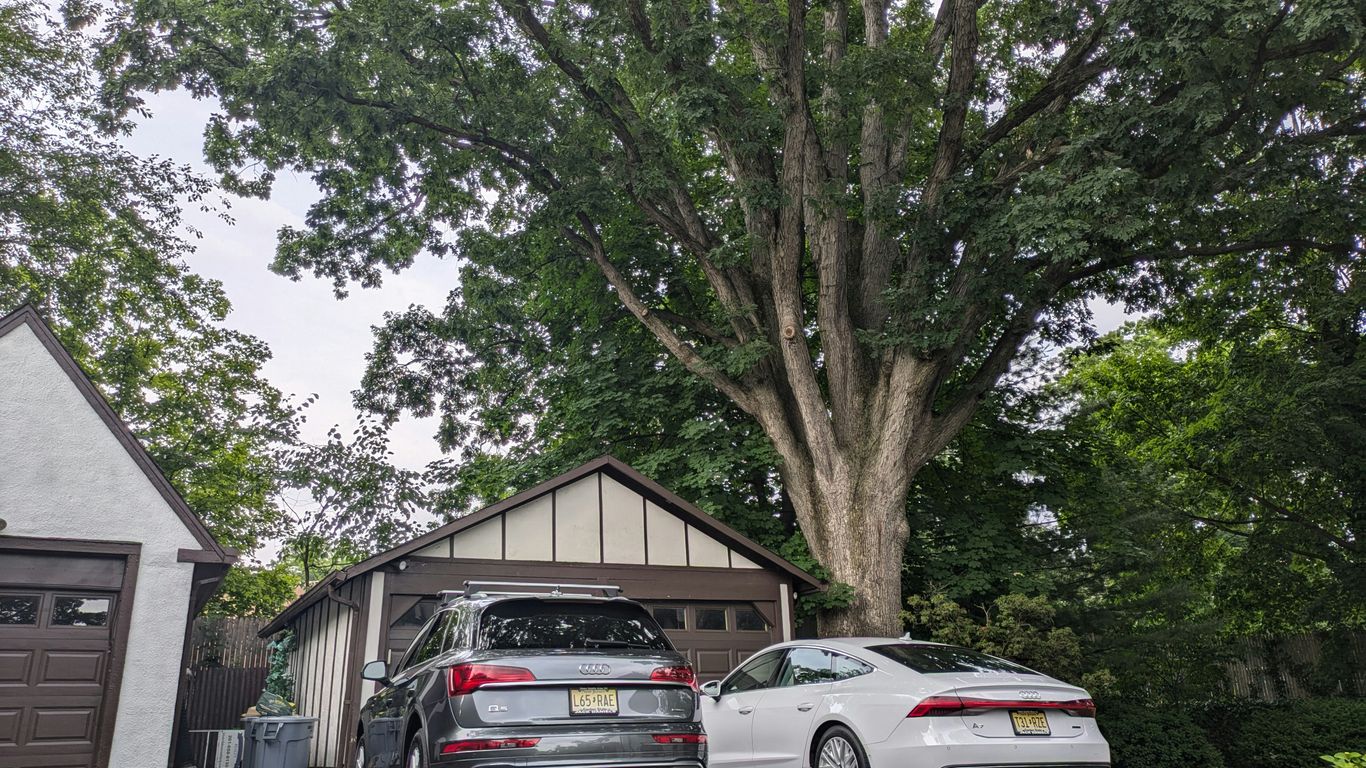
We look for decay, cracks, included bark, dead limbs, root problems, lean, and storm damage. Species matters too. Mature oak, maple, pine, hemlock, spruce, and beech can carry substantial weight, but condition matters more than the name of the tree. We decide on site whether removal, trimming, preservation, or emergency work is appropriate.
Measuring access for the crane and equipment
The crew checks driveway width, turning room, overhead clearance, ground firmness, and the distance from the crane to the tree. Narrow rural driveways and thick understory can limit staging. A setup that looks open from the street may not leave enough room for stabilizing equipment or moving logs afterward.
Checking overhead wires, structures, and traffic
Power lines, service drops, roofs, chimneys, garages, and public roads must be accounted for before cutting begins. We mark the work zone and determine how people and vehicles will stay clear. If town rules, permits, or conservation bylaws may apply, confirm the requirements with the town before scheduling work.
Planning the lift, landing area, and work zone
Every pick needs a destination. We plan the sequence from the top down, choose attachment points, estimate section weights, and identify where logs and brush will be processed. This crane-assisted removal guide walks through inspection, positioning, rigging, lifting, and final cleanup in the same order our planning follows.
How crane-assisted tree removal works
The work is a series of controlled lifts, not one large cut. The climber or ground crew prepares each section while the operator follows agreed signals or radio communication. Sections move from the tree to the landing area, where they are cut, loaded, or chipped. Good coordination keeps the sequence moving without rushing a hazardous step.
Setting up the crane and protecting the site
The crane is positioned on the firmest practical surface with room for stabilization and rotation. We protect driveways and travel paths as planned, establish the exclusion zone, and keep bystanders out. Setup takes time because a stable machine is part of the removal plan, not an afterthought.
Removing branches and preparing the trunk
The crew removes branches in a sequence that keeps the tree balanced and opens the crane’s working path. The trunk is then divided into sections suitable for the planned lifts. Each cut accounts for the section’s weight, the tree’s movement, and the space below.
Attaching sections for controlled lifting
Rigging is attached to a prepared section and checked before the cut is completed. The operator takes the planned tension, and the crew confirms that the section is ready to move. The piece is not released until the people on the ground and in the tree are clear.
Swinging and lowering wood to the processing area
The operator swings or lowers each section toward the landing area selected during the site review. Ground workers guide the piece only from a safe position and then move it for bucking, loading, or chipping. Our crane tree removal service is intended for large or hazardous trees in tight spaces and near structures, where this controlled movement is useful.
Cleaning up sawdust, brush, and remaining debris
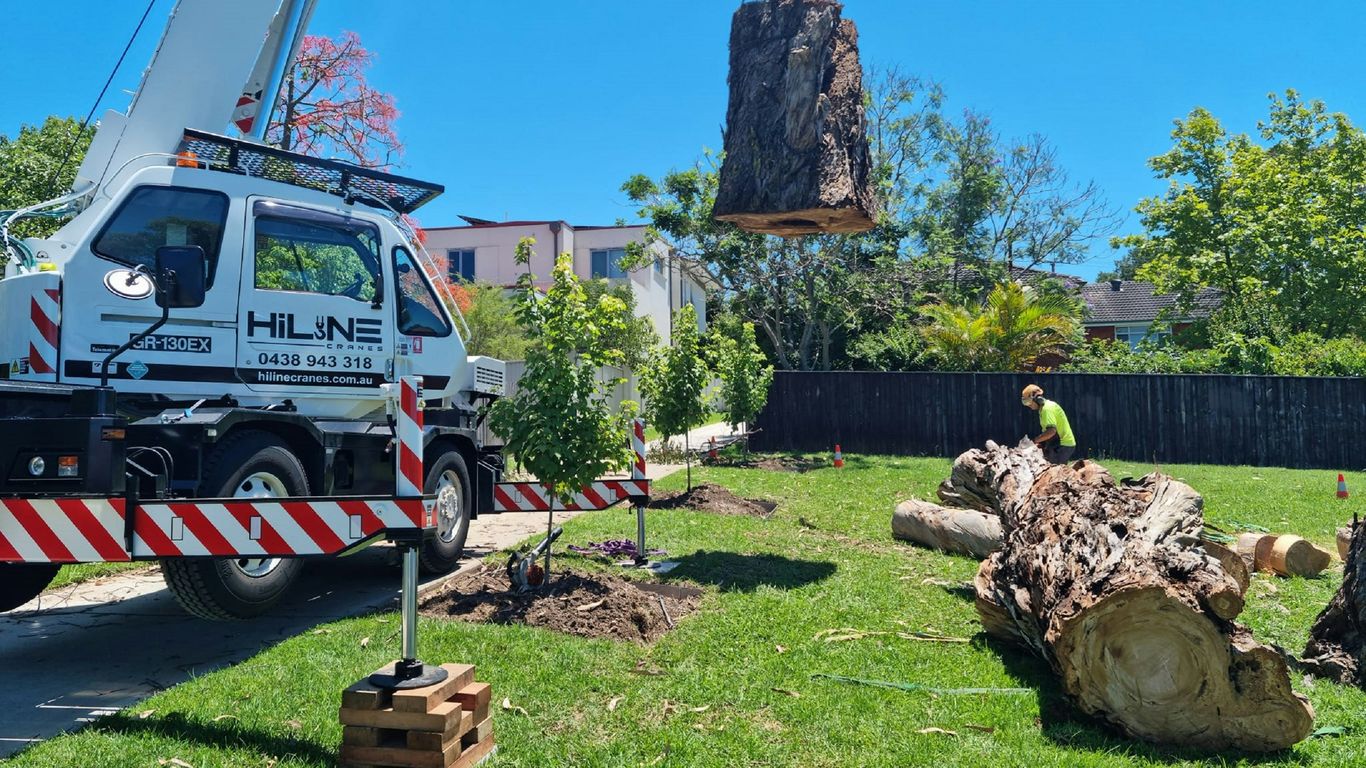
Removal is not finished when the last section reaches the ground. We process or haul away the agreed wood and brush, rake the work area, and clear sawdust and small debris. Before leaving, we check the lawn, driveway, fence lines, and access route for material that still needs attention.
What affects the cost of crane-assisted tree removal
In Massachusetts, a typical crane removal is priced from $2,000 to $15,000 and up. A straightforward large tree with good access sits toward the lower end, while a heavy, damaged tree over a structure can move well beyond it. The estimate should show the crane, labor, cutting, processing, hauling, and cleanup rather than hiding them in one vague number.
Tree size, condition, and number of sections
Height, trunk diameter, limb spread, and wood weight affect how many picks the crew makes. A decayed or storm-damaged tree may require smaller sections and slower handling. More sections mean more cuts, attachments, and movements, even when the tree itself is not especially tall.
Crane size, rental time, and travel distance
The crane must reach the tree with the required capacity at the planned working distance. Larger equipment and longer rental windows raise the project cost. Travel from the crane yard to the property also appears in the estimate, especially for jobs outside the immediate service area.
Access, setup space, and local restrictions
A tight driveway, soft ground, road closure, or difficult staging point can add labor and coordination. Traffic control may be needed near a public road. Town rules can also affect timing. Ask the town about permits and conservation requirements if the property is near wetlands or regulated areas.
Typical project pricing in Massachusetts
Use the range as a starting point, then compare what each estimate includes. Our crane removal cost guide covers crane setup, crew time, property constraints, and cleanup in more detail. A low number that excludes hauling or stump work is not directly comparable to a complete removal price.
| Project condition | Typical pricing direction | Why it changes |
|---|---|---|
| Large tree with open access | Lower end of range | Fewer setup and access problems |
| Tree near a roof or structure | Middle to higher end | Smaller picks and tighter control |
| Damaged or unstable tree | Higher end | Slower work and additional planning |
| Multiple large trees | $15,000 and up is possible | More lifts, processing, and crane time |
The table is a planning guide, not a quote. A written site estimate is the useful next step because it accounts for the actual tree, access, and landing area.
How to prepare your property for the crew
A clear property lets the crew focus on the tree and keeps the work zone predictable. We need room for the crane, trucks, people, and sections of wood. Move what can be moved, tell us what cannot, and keep the planned access route open. Small preparation steps can prevent delays on the morning of the job.
Clearing vehicles, furniture, and movable items
Move cars, grills, patio furniture, planters, children’s equipment, and portable decorations away from the tree and the crane route. Close windows and keep doors shut near active cutting. If an item cannot be moved, point it out before work begins so the crew can include it in the site plan.
Keeping people and pets outside the work zone
Keep children, visitors, and pets indoors or at another location during the removal. The exclusion zone may extend beyond the tree because lifted sections and equipment need working room. Our crew will direct people around the site when access changes.
Leaving access open for trucks and equipment
Do not block the driveway with a vehicle or delivery. Keep gates unlocked if the crew has permission to use them, and trim nothing yourself unless the crew asks. The access route may need to accommodate the crane, chipper, loader, and hauling truck.
Identifying septic covers, irrigation, and buried utilities
Tell the crew where septic covers, irrigation lines, invisible fencing, drainage, wells, and buried utilities are located. Mark features that are easy to miss under grass or mulch. Before work, we can adjust travel paths and landing plans around those areas.
A practical preparation list is short:
- Move vehicles and outdoor furniture.
- Keep people and pets away from the work zone.
- Leave the driveway and gates accessible.
- Mark septic, irrigation, wells, and buried utilities.
After these items are handled, the crew can verify the plan instead of spending the morning clearing obstacles.
When a crane is not the best solution
A crane is useful, but it is not automatically the right tool. Open wooded parcels may allow controlled ground removal with less equipment and lower cost. Smaller pruning jobs usually need a different approach. We choose the method after looking at the tree, the ground, the access, and the property you want to protect.
Trees with clear room for controlled ground removal
If a tree has a safe drop zone away from buildings, wires, septic areas, and finished landscaping, a ground-based removal may be more practical. The crew can fell or dismantle it in a planned direction and process the wood nearby. Bringing in a crane would add cost without solving a real access problem.
Properties without enough crane access
Some driveways are too narrow, bridges are not rated for the equipment, or soft ground cannot support a crane setup. A wooded property may also have no suitable staging point. In those cases, we may use climbing, ropes, smaller equipment, or a staged removal plan.
Smaller pruning and tree trimming projects
A crane is rarely needed for routine deadwood removal, clearance pruning, or light canopy work. Tree trimming services may be the better fit when the tree can remain standing and the work is limited to selected branches. The decision should follow an on-site review, not the size of one limb viewed from the ground.
When preservation or staged removal makes more sense
A tree that has a manageable defect may be a candidate for preservation or selective reduction rather than immediate removal. A hazardous tree may also be removed in stages if access, weather, or property use requires it. We explain the practical options and make the final recommendation after inspecting the tree.
Conclusion
Crane-assisted tree removal is usually the right choice for a large, unstable, or badly placed tree where falling wood could damage a roof, pool, septic system, lawn, or neighboring structure. We inspect the site, plan each lift, move sections to a controlled landing area, and clean up the remaining debris. For the next step, request an estimate so the crew can assess the tree and property in person.
Frequently Asked Questions
How much does crane-assisted tree removal cost?
In Massachusetts, typical crane-assisted removals range from $2,000 to $15,000 and up. Tree size, condition, access, crane time, travel, restrictions, and cleanup move the price within or beyond that range.
How long does a crane tree removal take?
A suitable large removal may be completed in one morning, while a complex or damaged tree can take longer. Setup, weather, section size, access, and the amount of processing affect the schedule.
Can a crane remove a tree over a house?
Yes. The crew can prepare and lift sections away from the roof when the site has suitable crane access and a safe landing area. The tree and property must be evaluated before that method is approved.
Will a crane damage my lawn or driveway?
A crane can still create pressure on the ground or driveway, but planned positioning and ground protection can reduce the impact. Lifting wood away also avoids dragging heavy sections across the yard.
Do I need to leave my property during removal?
You should stay outside the marked work zone and follow the crew’s directions. For some properties, leaving during active cutting is the simplest way to keep people and pets clear.
Can a crane remove a storm-damaged tree?
It can be appropriate for a damaged tree when climbing or ordinary felling would be unsafe. The crew must inspect the damage, roots, trunk, overhead hazards, and access before choosing the removal method.
Is a crane needed for every large tree?
No. A large tree with a clear drop zone may be removed safely without a crane. Crane work makes more sense when structures, tight access, fragile ground, or an unstable tree limit the available landing space.