
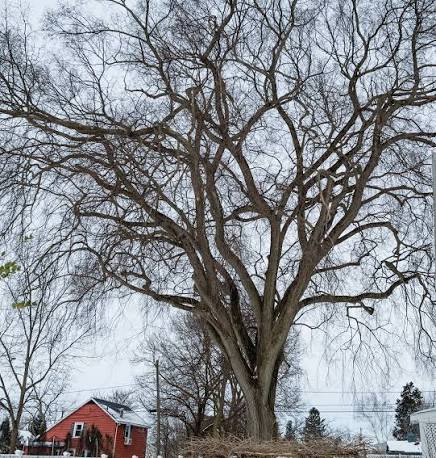
Some New England trees are more likely than others to lose branches during freezing rain, but species alone does not tell us which tree will fail first.
American and Siberian elms, silver maples, green ash, willows, poplars, and other trees with broad crowns or weaker branch architecture have historically shown higher susceptibility to ice loading. White oak, eastern hemlock, spruce, and several trees with coarse or conical branching tend to perform better.
Then there is a large middle group. Red maple, white ash, eastern white pine, northern red oak, beech, and several birches can all suffer serious ice storm tree damage without belonging to the highest-susceptibility category.
At Arbor Tree Service, that is why we look at the individual tree after an ice storm. Species tells us where to start. Branch unions, decay, crown shape, previous damage, and what sits underneath the tree tell us what to do next.
Why Freezing Rain Is So Hard on Trees
Freezing rain reaches the tree as liquid water and freezes when it contacts a cold branch.
The glaze keeps building while the storm continues.
Every twig gains weight. Every secondary branch gains weight. Large limbs start carrying loads they did not have a few hours earlier.
A broad crown provides more surface for that ice to collect. Fine branching adds even more surface area.
Wind can make the situation worse because a branch that is already heavily loaded now has to deal with movement as well.
That is why a tree that handles ordinary winter weather without trouble can begin losing branches during a prolonged icing event.
Ice on Tree Branches Changes the Load Across the Whole Crown
We do not look at ice as if someone simply hung one heavy weight from one branch.
The load is spread throughout the crown.
A tree with hundreds of small twigs can collect a surprising amount of glaze.
As those outer branches bend, their position changes. Weight shifts toward unions farther back in the tree. A weak fork that looked quiet before the storm may suddenly be carrying forces from an entire ice-covered section of canopy.
If that union contains included bark or decay, failure can start there.
The branch that lands in the yard may be twenty feet long, but the structural problem may have been developing at the attachment for decades.
Which Trees Tend to Break First?
There is no universal New England ranking because storm severity, wind, tree age, site exposure, and previous condition vary.
Still, research gives us useful patterns.
Trees that repeatedly show higher ice susceptibility tend to share one or more of these traits:
broad crowns, extensive lateral branching, fine twigs, included bark, weak branch unions, previous decay, or crown imbalance.
That group includes several familiar Massachusetts trees.
Silver Maple Deserves Early Attention
Silver maple is one of the trees we pay close attention to after a heavy icing event.
It is a fast-growing tree that can develop long limbs, broad crowns, and structural weaknesses as it matures. Published ice-storm research consistently places silver maple among the more susceptible species.
That does not mean a healthy silver maple needs to come down before winter.
It means we want to know how the crown is built.
Long, overextended limbs above a house or driveway carry different consequences from similar branches over open lawn.
Co-dominant stems and narrow unions add another concern because accumulated ice increases the load on attachments that may already have limited structural strength.
Our tree trimming service can address dead, damaged, overextended, and poorly balanced branches before they become storm debris.
American Elm and Siberian Elm Have a Difficult Crown Shape for Ice
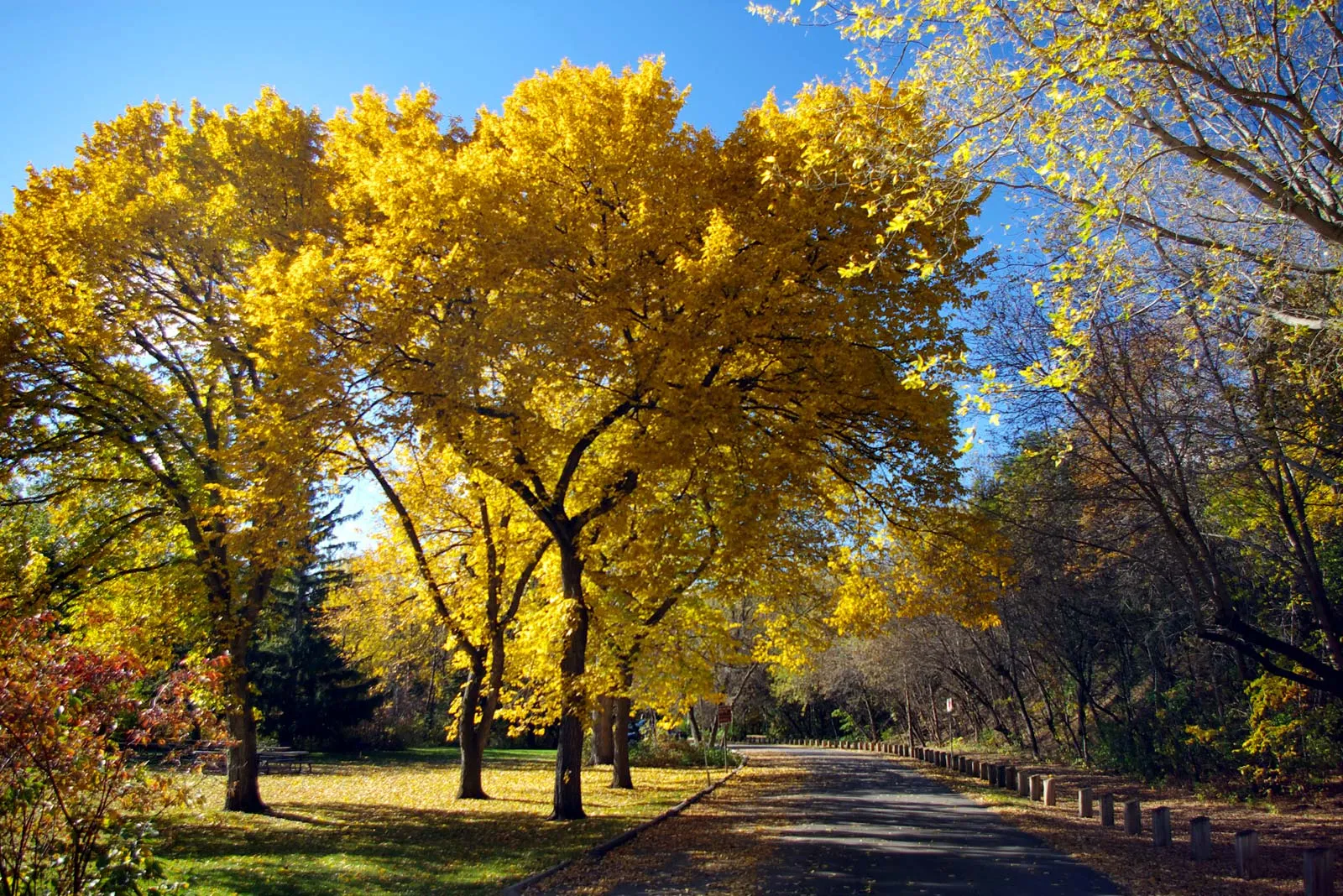
American elm and Siberian elm appear in the susceptible category in ice-storm research.
Part of the reason is architecture.
A mature elm can develop a wide, spreading crown with substantial lateral branch area. More branch surface gives freezing rain more places to accumulate.
Branch attachment matters too. Narrow unions and included bark can turn a heavily loaded fork into a failure point.
We do not remove an elm because it is an elm.
We inspect the unions, deadwood, previous pruning, crown balance, and targets beneath it.
An old elm with a broad crown above a parking area deserves more attention than the same species standing away from people and structures.
Green Ash Can Take Heavy Crown Damage
Green ash has also historically shown higher susceptibility to ice accumulation.
White ash is different.
The major ice-storm classifications generally place white ash in an intermediate category rather than grouping both ashes together.
That distinction matters because common names can make species discussions sound simpler than they are.
We still assess an ash based on its current condition.
Deadwood, weakened attachments, canopy decline, previous storm damage, and existing decay can move an individual tree into a much higher concern category regardless of where the species appears in a research table.
Poplars, Aspens and Willows Can Lose Large Amounts of Wood
Several members of the poplar and aspen group have performed poorly during severe ice events.
Willows are another group that can sustain substantial breakage.
These trees often develop long branches and broad crowns. Some also grow quickly and accumulate structural problems as they mature.
If a large willow hangs over a driveway or a poplar has repeatedly lost branches in previous storms, we want to know that before the next glaze event.
Past failure is useful information.
A tree that has already lost major sections may have a lopsided crown that collects and carries future ice differently.
Birches Are More Complicated Than They Look During an Ice Storm
Birch trees create some of the most dramatic ice-storm scenes because their stems and crowns can bend heavily under load.
A paper birch may bow almost to the ground.
That appearance does not automatically mean the trunk has failed.
Research classifications generally place paper, yellow, and gray birch in an intermediate range for initial ice susceptibility rather than putting every birch among the first species to break.
Paper birch deserves separate attention after severe damage, though.
Long-term research following the 1998 Northeast ice storm found paper birch particularly sensitive after major injury. Its ability to recover from heavy crown loss was poorer than several other northern hardwoods.
For a homeowner, that means we separate bending from breakage and then look at how much living crown remains.
Red Maple Is Common, but Common Does Not Mean Most Fragile
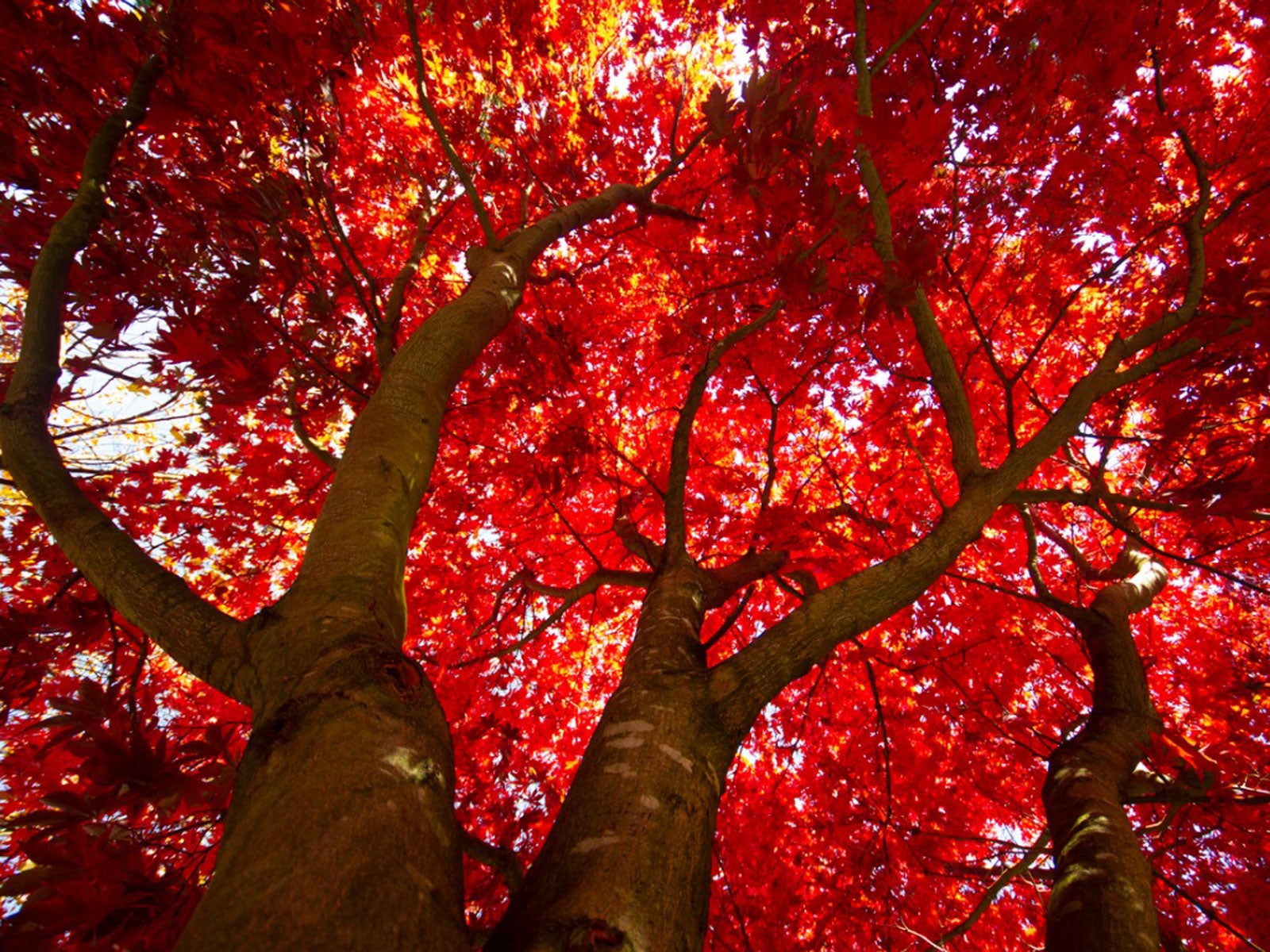
Red maple is everywhere in New England landscapes, so we see plenty of damaged red maples after storms.
That can create the impression that the species is among the weakest.
Published ice-storm classifications generally put red maple in an intermediate category.
An individual red maple can still be a poor storm candidate.
A large co-dominant trunk with included bark may split.
A neglected crown may carry long overextended limbs.
Previous storm wounds can develop decay.
An edge tree may grow heavily toward one side where sunlight is available.
We care more about those conditions than the fact that the leaves turn red in October.
White Ash Is Also an Intermediate Case
White ash can lose branches and crown during severe ice loading, but it should not automatically be described as one of the first New England species to break.
Research following the 1998 storm found that healthy white ash could recover well from injury.
The word “healthy” matters.
A tree entering winter with good structure and adequate living crown has a different outlook from one already carrying deadwood, decay, root problems, or major dieback.
We assess what existed before the ice and what changed during the storm.
American Beech Can Be Damaged Without Belonging at the Top of the List
Beech can suffer branch loss during glaze events, particularly where broad crowns carry considerable ice.
Still, the larger research compilations generally place American beech in an intermediate category.
We would not label every mature beech a high-risk ice tree.
A sprawling open-grown beech with long horizontal limbs is different from a more compact forest-grown tree.
Site and crown form matter.
That pattern comes up repeatedly in ice-storm research: the same species can perform differently depending on how the tree grew.
Eastern White Pine Can Look Terrible After Ice
White pines deserve a closer explanation because Massachusetts homeowners know what storm-damaged pines look like.
Large limbs can break.
Tops can fail.
Branches can droop dramatically.
Mature pines at forest edges can carry uneven crowns that expose them to additional loading.
Yet eastern white pine is generally placed in the intermediate ice-resistance category rather than among the most susceptible species.
Its conifer form gives it some advantages. Flexible branches and a more vertical crown architecture can help distribute loading.
That protection has limits.
A tall pine with an imbalanced crown, old branch failures, multiple leaders, or existing decay can still create a serious hazard.
Spruce and Hemlock Tend to Handle Ice Better
Many conifers perform relatively well under ice loading because their crowns are more conical and their branches can flex downward.
White spruce, Norway spruce, and eastern hemlock appear among more resistant species in published classifications.
That does not make them storm-proof.
A conifer can still lose a top, uproot, or break if the ice load becomes severe enough or wind arrives while the crown is heavily coated.
Roots matter too.
A tree growing in restricted soil, on a wet site, or with damaged roots can fail at the ground instead of in the canopy.
Species resistance reduces one part of the risk. It does not erase the rest of the tree.
Oaks Need to Be Separated by Species
Saying “oaks resist ice” is too broad.
White oak performs well in ice-storm research and is consistently placed among resistant species.
Swamp white oak also rates well.
Northern red oak generally falls into an intermediate group.
Black oak has appeared in susceptible categories in broader research reviews.
Branch architecture and rooting characteristics help explain some of those differences.
Even within one species, an old open-grown oak can have enormous lateral limbs that collect more ice than a narrower forest-grown tree.
We inspect the tree we have rather than relying on the word “oak.”
Black Walnut Has a Useful Ice-Storm Trait
Black walnut tends to develop relatively coarse branching.
Fewer, thicker branches mean less fine surface area for ice to coat compared with a densely twigged crown.
That architecture is one reason black walnut repeatedly appears among more ice-resistant trees.
It is a good illustration of why ice damage is not simply about whether wood feels hard or soft.
The way the crown is built matters tremendously.
Branch Attachment Can Matter More Than Wood Strength
A large healthy limb can support tremendous weight until the load reaches a weak union.
Included bark develops when bark becomes trapped between two expanding stems rather than allowing a stronger wood connection to form through the union.
Ice adds weight to both sides of that attachment.
If the stems move independently in wind at the same time, the union is loaded again.
That is why we look closely at narrow forks, co-dominant stems, and old cracks before and after winter storms.
A species with average ice resistance can still become one of the most concerning trees on the property when a major structural defect is present.
Deadwood Enters the Storm Already Weakened
Dead branches do not need an extreme ice event to fall.
Freezing rain simply gives them another load to carry.
Decay can have the same effect on living branches.
The outside of a limb may still look substantial while internal decay has reduced the amount of sound wood carrying the load.
Pre-winter tree trimming is useful when it targets identifiable deadwood, damaged limbs, and structural problems.
We are not trying to strip the tree so ice has nowhere to land.
We are addressing branches that already have a reason to concern us.
Broad and Imbalanced Crowns Collect Ice Differently
A tree standing at the edge of woods often grows heavily toward the open area.
That creates a one-sided crown.
When freezing rain coats that canopy, one side of the trunk and root system can receive much more load.
Trees growing in open yards can also develop wide, spreading crowns because they never had neighboring trees competing for light.
That is why two trees of the same species and diameter may react very differently in the same storm.
One has a narrow, balanced crown.
The other carries long lateral limbs over the house.
Species is the label. Architecture is what the ice actually loads.
Wind During the Ice Event Changes Everything
A still ice storm and a windy ice storm are not the same mechanical event.
As ice builds, branches sag under static weight.
Wind then moves that already loaded crown.
A branch union has to resist both the weight and the changing forces created by movement.
This is one reason damage can increase rapidly when wind arrives after hours of freezing rain.
If branches are already hanging lower than normal, stay out from beneath the canopy.
The tree can keep failing after the rain itself has stopped.
Do Not Hit Ice-Covered Branches to Knock the Ice Off
It is tempting to grab a pole or broom when a favorite tree is bent under ice.
We would leave it alone.
Frozen branches are heavily loaded and can be brittle. Hitting or shaking them changes the load suddenly and may produce the failure you were trying to prevent.
Stay out from beneath the crown and allow the ice to melt naturally.
Once the load is gone, we can see which branches recovered their position, which ones broke, and which unions opened under the weight.
The post-storm tree often looks very different from the ice-covered tree.
A Bent Tree Is Not Automatically a Lost Tree
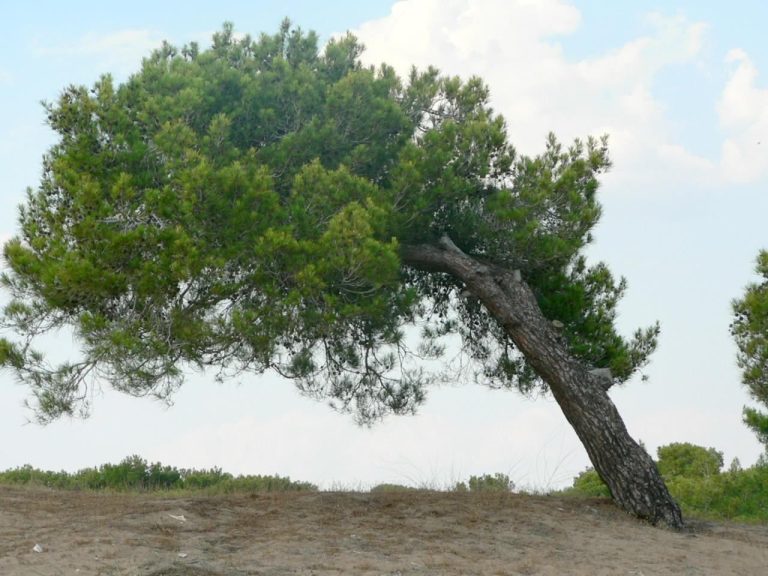
Young stems and flexible trees can bend dramatically under ice.
Some recover once the load disappears.
That is different from a trunk that has snapped, a root plate that has lifted, or a major union that has opened.
Do not try to pull a large bent tree upright while it is still ice-loaded.
We want to know what the tree does once the ice is gone.
For larger trees near structures, an inspection can determine whether the bend was temporary or whether roots, stems, or major unions were damaged.
How Much Crown Loss Can a Tree Survive?
Research following the major 1998 Northeast ice storm gives us a useful reference.
Trees with less than about 50% crown loss often had a good chance to recover.
Trees in the 50% to 75% range required more judgment and follow-up.
Once crown loss exceeded roughly 75%, the long-term outlook became much poorer. Breakage of the main stem below the living crown was another serious sign.
Those numbers are useful, but we do not use them as an automatic backyard removal formula.
A forest-management guideline answers a different question from a residential risk assessment.
Why the 50% Rule Does Not Decide Whether Your Backyard Tree Stays
Imagine two trees that each lost 40% of their crown.
One stands at the back of a wooded property.
The other has a split main union over a child’s bedroom.
The percentage is the same.
The decision should not be.
For residential trees we also consider what failed, what remains attached, whether the trunk or roots were damaged, the location of the remaining crown, and what could be struck if another failure occurs.
That is why our tree preservation work begins with the condition of the individual tree rather than a percentage alone.
A Broken Main Leader Is Different From Several Broken Small Limbs
Five broken two-inch branches can look messy.
One failed main leader can change the architecture of the entire tree.
When the main stem breaks below the living crown, the tree has lost a major part of the structure that organized and supported that canopy.
Large torn wounds also expose more wood than small branch failures.
We look at where the damage occurred, not simply how many branches are on the ground.
Watch Co-Dominant Stems After the Ice Melts
Two large stems arising from the same union can carry enormous separate crowns.
When both are coated in ice, each stem pulls on the shared attachment.
If included bark is present, that union may have less wood-to-wood connection than it appears to have from the ground.
After the storm, look for a seam that has widened, fresh exposed wood, torn bark, or a crack extending below the fork.
Do not stand underneath it to inspect.
A co-dominant union that has started separating can remain loaded even after most of the ice is gone.
Root Movement Can Be Easy to Miss
Ice storms are usually discussed as branch-breaking events.
Whole-tree failure can happen too.
A heavily loaded crown creates force at the root system, especially when wind is involved.
Look from a safe distance for newly lifted soil, cracking around the root plate, or a tree that has changed angle.
A new lean after the storm deserves more attention than a tree that has grown at the same angle for decades.
If the root plate moved, pruning broken branches alone does not address the main problem.
Power Lines Move the Tree Out of DIY Territory
Ice can bring branches and electrical conductors down together.
If a tree or branch is contacting a wire, stay away.
Do not try to pull the branch free.
Do not assume a dark-coated line is safe to touch.
Massachusetts emergency guidance treats downed wires as potentially live, including wires hidden in tree debris.
Call the utility and 911 when there is an immediate electrical hazard.
Once the electrical condition has been addressed, tree work can proceed under the appropriate plan.
Which Trees Do We Inspect First After a New England Ice Storm?
We start with consequences and visible structural change.
A tree gets our attention quickly when it has a major broken limb hanging over a house, a newly split trunk, an opened co-dominant union, a broken top, root-plate movement, or substantial crown loss.
Then species helps provide context.
A silver maple with a broad damaged crown raises different expectations from a sound white oak with minor twig loss.
A paper birch with heavy crown loss deserves more caution about long-term recovery.
A white pine that has lost its leader may need more work than another pine that simply sagged and returned to position.
The inspection tells us which tree actually needs action.
When Pruning Is Enough
Many ice-damaged trees can remain.
If the trunk and roots are stable, major unions remain sound, and the tree retains enough functional crown, corrective pruning may be the appropriate response.
That can involve removing hanging branches, cleaning up broken attachments, reducing damaged limbs back to suitable laterals, and restoring a workable crown structure over time.
We do not try to make a storm-damaged tree look perfect in one aggressive pruning session.
The amount of live tissue remaining matters.
Our professional tree trimming work is based on what the tree can retain safely, not on making every storm wound disappear visually.
When Tree Preservation Is Still Reasonable
Some mature trees look terrible the morning after an ice storm and recover surprisingly well.
If the main stem is intact, roots remain stable, and enough crown survived, keeping the tree may be reasonable.
That is especially true when the failed material was mostly secondary branching rather than major scaffold limbs.
Our tree preservation service gives us another path when immediate removal is not justified.
We can monitor recovery and deal with structural problems that become clearer as the tree grows.
When Storm Damage Tree Removal Makes More Sense
Removal moves higher on the list when the storm has changed the primary structure of the tree.
Examples include a trunk split through a major union, major root failure, a stem broken below the crown, extensive decay exposed by failure, or a remaining crown that cannot reasonably be retained around the property’s targets.
A damaged tree resting on a house or another tree may also require removal even when part of the trunk remains alive.
Our storm damage tree removal planning considers the remaining structure and how the tree can be dismantled without creating another failure during the work.
Crane Removal Can Be Useful When the Tree Is Too Damaged to Climb
Severe ice damage can leave a tree standing but unreliable.
A cracked leader may still be attached.
A hollow trunk may be holding a broken crown.
Large limbs can remain suspended over a roof.
Those conditions can make climbing or conventional rigging a poor choice.
Our crane tree removal service allows us to support sections before they are cut and move them away from structures under control when the property and setup allow it.
The crane is a method, not an automatic response to every damaged tree.
We choose it when the tree and site make that extra control useful.
Ice Damage in Billerica
Billerica properties have mature trees growing close to homes, garages, driveways, streets, and utility corridors.
After a winter storm, a hanging limb or newly split trunk in those settings deserves prompt attention because there may be little room for the next failure.
Our tree removal service in Billerica, MA handles damaged and hazardous trees when pruning or preservation no longer gives us a reasonable path forward.
If the problem is actively dangerous, our 24/7 emergency tree service in Billerica handles fallen trees, broken hanging limbs, blocked access, and other urgent storm conditions.
Beverly Trees Face Their Own Winter Exposure
Beverly’s coastal setting creates a different combination of wind and winter exposure from many inland properties.
The species principles remain the same, but wind can compound the mechanical load on an ice-covered crown.
Our tree removal service in Beverly, MA evaluates storm-damaged trees based on trunk condition, roots, remaining crown, nearby structures, and the amount of control required for the work.
A tree does not become a removal candidate simply because it was covered in ice.
We want to know what the storm changed.
What to Check After the Ice Is Gone
Once conditions are safe and the glaze has melted, walk the property from outside the fall zones.
Look up before walking underneath a tree.
Check for hanging branches, newly exposed wood, fresh trunk cracks, split unions, broken tops, limbs resting in neighboring trees, or soil movement at the roots.
Compare the tree’s lean with what you remember before the storm.
If a section fell near a roof, vehicle, driveway, or utility line, inspect the surrounding tree as well. The piece on the ground may not be the only section that was damaged.
Do not pull suspended branches down with a rope from underneath them.
Pre-Winter Pruning Should Target Defects, Not Strip the Crown
We can reduce some storm exposure before winter, but excessive pruning creates its own problems.
The goal is not to remove enough branches that ice cannot accumulate.
We target deadwood, damaged branches, weak structural growth, and limbs whose length or position creates avoidable concern.
Good pruning can improve crown balance and remove known weak material.
It cannot make a tree immune to freezing rain.
The storm still decides how much load arrives.
Species Is the Starting Point, Not the Verdict
A silver maple may be more ice-susceptible than a white oak on paper.
A sound silver maple with good branch attachments can still outperform a white oak with advanced decay and a cracked main union.
That is why we do not recommend removal from a species list.
We use species to understand expected behavior, then inspect the actual structure carrying the ice.
If ice, wet snow, or winter wind has left your tree with broken limbs, a split trunk, a damaged top, or a new lean, call Arbor Tree Service at (781) 245-2826.
We provide 24/7 emergency tree service across our eastern Massachusetts service area. We can inspect what failed, determine what can reasonably stay, and handle pruning or removal when the storm has left a tree that can no longer be managed in place.